
What’s cooking in pantry? Bite into ‘adulterated’ truth | Delhi News


Food adulteration is emerging as a serious public health with repeated cases pointing to a widespread and systemic problem. From milk and paneer to sweets and processed foods, commonly consumed items are increasingly found to be sub-standard or contaminated—sometimes with fatal consequences.Recent incidents across states suggest this is not an isolated issue but a pattern of recurring violations, often driven by profit at the cost of consumer safety. One of the most alarming cases was reported from Andhra Pradesh’s East Godavari district, where suspected milk adulteration has claimed 16 lives. The case came to light on February 22 after a cluster of patients showing symptoms of acute kidney failure was reported from Chowdeswaranagar and Swaroopanagar areas, prompting health authorities to initiate an epidemiological investigation. Laboratory findings later confirmed that all 16 victims died of multi-organ failure triggered by acute renal failure after consuming milk contaminated with ethylene glycol, a toxic substance.
“Preliminary findings indicate that the victims suffered acute renal failure with elevated blood urea and serum creatinine levels, suggesting toxic exposure likely linked to contaminated milk consumption,” the release said. Milk supplied to over 100 families from a dairy unit in Narasapuram village under Korukonda mandal has been identified as the suspected source. Authorities said supply from the unit was immediately halted after it came under scrutiny. Amid growing concern, health minister Satya Kumar Yadav has assured strict action. “We will take stringent measures to prevent such incidents. Those responsible at any level will face serious consequences,” he said, signalling a tougher crackdown by the govt.
1,400 Kg Adulterated paneer seized in Surat
In Gujarat’s Surat, authorities seized 1,400 kilograms of paneer from a unit in the Pandesara area during a raid conducted in early March. The Surat Special Operation Group, along with food safety officials, confiscated paneer worth around Rs 3 lakh.
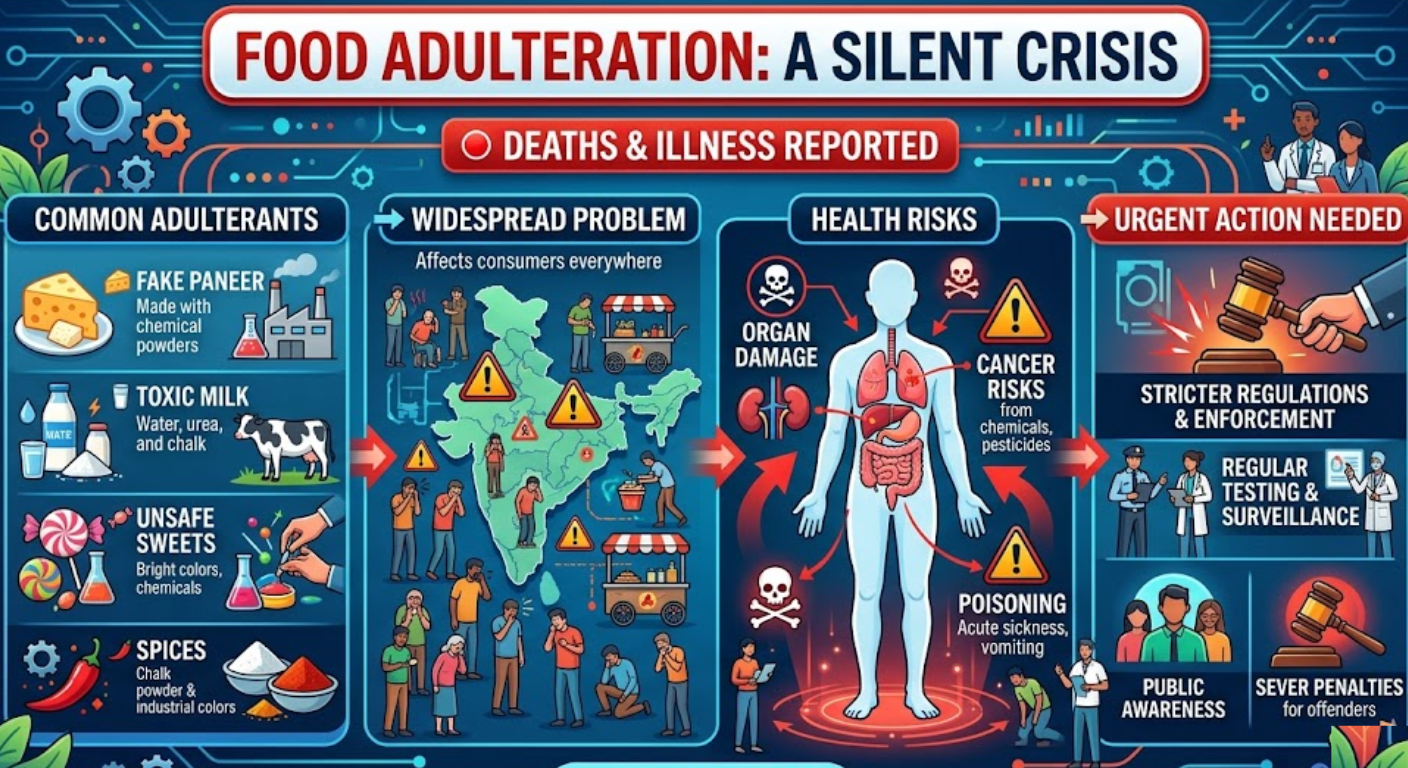
Laboratory tests confirmed the product was sub-standard, Deputy Commissioner of Police Rajdeepsingh Nakum said. Based on the findings, a case was filed against supplier Mahesh Sharma under Bharatiya Nyaya Sanhita (BNS) sections 274 (adulteration of food or drink intended for sale), 275 (sale of noxious food or drink), and 318 (4) (cheating). The supplier allegedly sold loose, adulterated paneer at Rs 220 per kg to several small dairies. During the raid, police also seized machinery, industrial-grade acetic acid, and palm oil worth Rs 28 lakh.
Hyderabad crackdown: Adulteration across multiple food products
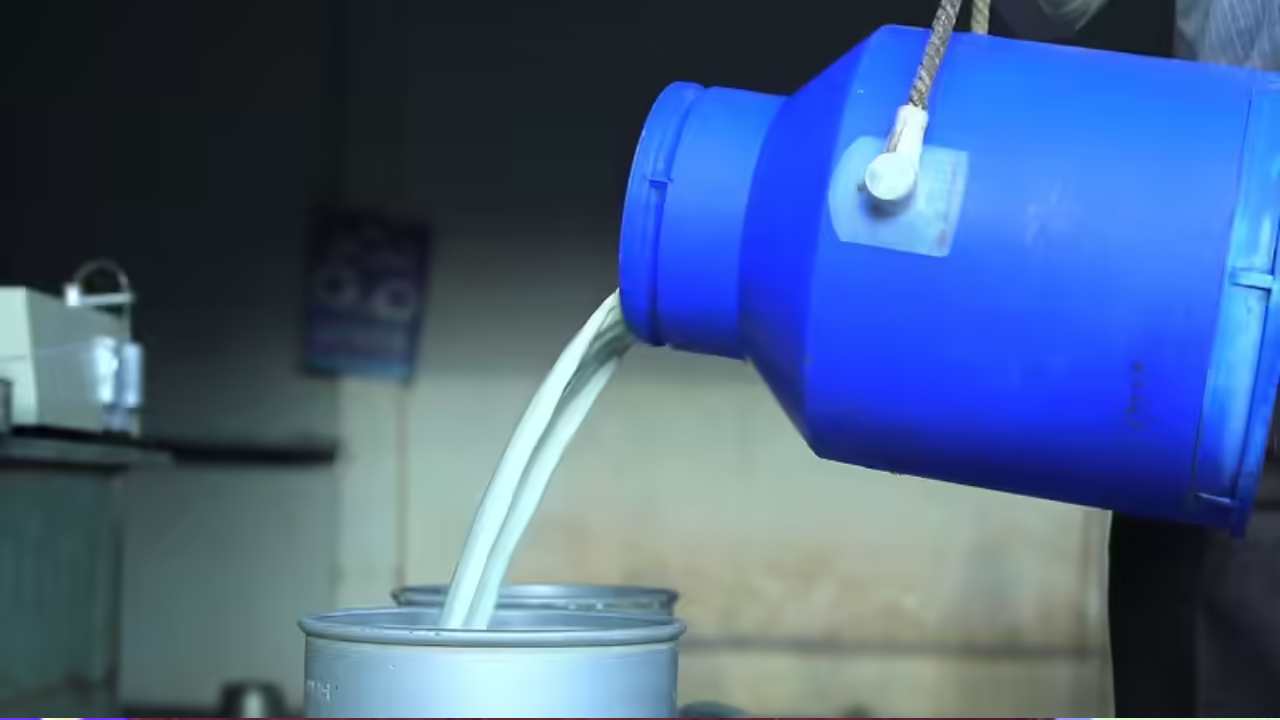
In March alone, several food centers involved in illegal activities were raided. Around 64 individuals were arrested while 61 cases were registered in this regard. More than 14,600 kg of adulterated food along with 400 liters of liquids were confiscated by authorities. The list of products that contained adulterated materials included items such as ice cream, Osmania biscuits, milk, and tea powder.The action was led by the newly formed H-FAST (Hyderabad – Food Adulteration Surveillance Team), working alongside food safety officials. Raids exposed shocking conditions—unhygienic factories, harmful chemicals, spoiled meat, and fake quality claims—all aimed at quick profits at the cost of public health.Hyderabad Police Commissioner V C Sajjanar didn’t mince words, stating: “Food adulteration is not just a crime. It is a silent, deadly attack on every household. From the biscuits and ice creams we lovingly give our children to everyday essentials like ginger-garlic paste, tea powder, milk, and curd, adulterators are poisoning the very food we trust. The scale and brazenness of these acts are deeply alarming.”He added there will be “zero tolerance” for offenders.
With the Telangana government now pushing for a dedicated food safety system, officials say this is just the beginning of a sustained crackdown to protect consumers.
Haryana sweets incident: 7 children hospitalised
A suspected case of food contamination has left seven children hospitalised in Haryana’s Nuh district, with one in critical condition. Seven children, including a toddler, of a family fell seriously ill after they allegedly consumed adulterated sweets in the Nagina area of Haryana’s Nuh on Saturday, police said, adding that one of the children is in critical condition. The children were immediately admitted to the District Civil Hospital. After giving first aid, five children were referred to Nalhar Medical College Hospital due to their serious condition, they added. According to the police, Aslam, a resident of Ganduri village, bought ‘Chamcham’ sweets from a sweet shop. When the children consumed them they began experiencing symptoms such as vomiting, anxiety, and foaming at the mouth, the police said. The children were identified as Sofaid (16), Ajuba (15), Sofia (10), Sanofia (8), Samar (4), Samreen (2), and Ruhaan (5).

Representative Image
The police have been informed of the matter. “No written complaint has yet been filed by the family and we will take necessary action upon receiving the complaint”, a senior police officer said.
Ludhiana dairy data: Paneer tops adulteration list
More than 16 percent of the dairy samples tested in the district since January 2024 failed quality assurance tests, with paneer leading the list of the most adulterated item’s, officials said. For this, out of 1,164 samples tested till February 2026, 188 samples have been found substandard or unsafe (ibid). Paneer tops this chart, accounting for 39.6 percent of failures, while milk accounts for 19 percent. Other items include ghee, curd, khoa and lassi. Most of the failed paneer samples were from local dairies. The data, however, shows some improvement over time — from 19.1% failures in 2024 to 16.2% in 2025, and 7.5% in early 2026. Officials said a 10% to 20% failure rate is considered “within the normal range”, but action is still taken. Vendors with poor hygiene are fined on the spot. Substandard cases go to the ADC court with penalties up to Rs 5 lakh, while unsafe food cases can lead to Rs 10 lakh fine and up to six months in jail.To address the issue, district health officer Dr Ashish Chawla has started a food safety van campaign from April 7 to 21 for on-the-spot testing and awareness. Residents are calling for stricter checks. One local, Amarjit Kaur, said her family suffered food poisoning after eating substandard paneer and urged authorities to step up inspections.

Representative Image
Food safety system under strain in Telangana
In 2025, GHMC conducted 9,656 inspections across Hyderabad, covering less than one-fifth of the city’s nearly 75,000 eateries, according to TOI report. Only 3,500 samples were collected, with just 65 violations found — under 2%. Around 40% of establishments were given improvement notices instead of stricter action.Across Telangana, only one food business licence was cancelled in 2024–25. Data shared in the Rajya Sabha by the Ministry of Health and Family Welfare (MoHFW) showed 125 violation cases were settled with penalties, but none led to convictions.“Enforcement efforts have also declined steadily in recent years. Sample analysis dropped from over 6,100 in 2023–24 and 4,800 in 2022–23 to just 3,347 in 2024–25 across Telangana,” an official from food safety wing of GHMC said. Officials say staff shortage is a key issue. Hyderabad has about 25,000 licensed eateries and nearly 50,000 unorganised units, but fewer than 20 food safety officers. There is also only one shared food testing lab in Nacharam for Telangana and Andhra Pradesh. Penalties remain low — up to Rs 5 lakh — reducing deterrence.Processed food samples show similar concerns. Nearly 10% were found adulterated, with 218 of 2,315 samples failing in 2025–26.Health experts warn of serious risks. “Long-term exposure to certain adulterants can increase cancer risk due to carcinogenic substances present in contaminated food. Adulterants can also trigger allergic reactions. Moreover, prolonged consumption of such food can harm organs like the kidneys, liver and heart,” said Deepa Agarwal of Nutriclinic.
Representative image
In 2025, Hyderabad reported over 8,000 cases of acute gastroenteritis, along with at least three deaths and hundreds of hospitalisations linked to food poisoning. “I had acidity and a severe stomachache recently after eating outside, and since then I’ve been very cautious,” said S. Niharika, an IT professional from Madhapur.
Processed food concerns: 10% samples fail safety standards
Adulteration of food does not just confine itself to fresh and dairy food but even extends to processed food.As per the figures provided by the Ministry of Health and Family Welfare, around 10% of processed food samples tested contained adulterants. In the period 2025-26, 218 out of 2,315 samples did not satisfy safety requirements.It can thus be seen that adulteration occurs in both the informal sector as well as processed foods industry.
A national public health threat
Health experts warn that food adulteration has severe long-term consequences.“Long-term exposure to certain adulterants can increase cancer risk due to carcinogenic substances present in contaminated food. Adulterants can also trigger allergic reactions. Moreover, prolonged consumption of such food can harm organs like the kidneys, liver and heart,” said Deepa Agarwal, founder and nutritionist at Nutriclinic. Civic health data reflects these dangers. Hyderabad alone recorded over 8,000 cases of acute gastroenteritis in 2025, along with multiple deaths linked to contaminated food and water. With incidents reported across regions and food categories, experts say the issue has now grown into a national public health threat, requiring stronger enforcement, better infrastructure, and sustained monitoring to ensure food safety.